Google Ads versus Meta Ads comparison for business growth

Google Ads vs Meta Ads in 2026: Which Is Better for Local Businesses?

One of the most common questions local business owners ask is simple: should we spend our advertising budget on Google Ads or Meta Ads?

The answer is not that one platform is universally better. They solve different customer-acquisition problems. Google is usually strongest when people are already searching for a solution. Meta is usually strongest when you need to create attention, build demand or reach a defined audience before they actively search.

For many businesses, the best long-term strategy uses both. But if your budget is limited, you should know which one deserves the first rupee.

The simplest difference: demand capture vs demand creation

Google Search Ads are mainly a demand-capture channel. Someone searches “dentist near me,” “SEO agency in Prayagraj,” “best coaching institute” or “AC repair today,” and the advertiser competes to appear at that moment of intent.

Meta Ads on Facebook and Instagram are mainly a demand-generation and discovery channel. The user may not be searching for you at all. Your creative has to stop the scroll, create interest and make the offer feel relevant.

This difference should influence everything from campaign structure to landing-page design.

When Google Ads usually makes more sense

Google Ads is often the stronger first channel when:

  • Customers already search for your service.
  • The purchase or enquiry has high intent.
  • You can describe your offer with clear commercial keywords.
  • Your business serves a defined location.
  • A lead has enough value to justify paid search costs.

Examples include clinics, legal services, home services, coaching, B2B services, local agencies and urgent-need categories.

The advantage is timing. You are reaching someone who has already expressed a need.

When Meta Ads usually makes more sense

Meta Ads is often stronger when:

  • Your product is visually compelling.
  • People may not actively search for the category yet.
  • You have strong short-form video or image creative.
  • Your offer works well with impulse, aspiration or curiosity.
  • You want to build a retargeting audience at scale.

Fashion, food, fitness, beauty, events, lifestyle products, consumer apps and many direct-to-consumer offers can perform well when the creative is strong.

Which platform gives better lead quality?

There is no universal answer, but search intent often gives Google an advantage for high-intent service leads. Someone typing a specific service query is actively looking for help.

Meta can generate excellent leads too, but lead forms and broad audience campaigns need stronger qualification. A low cost per lead is not automatically a good result if the leads do not answer calls, cannot afford the service or were only mildly curious.

Measure qualified leads, appointments and sales—not only form submissions.

Which platform is cheaper?

Cost per click is the wrong metric to use by itself. Meta may produce cheaper clicks while Google produces fewer but more commercial visits. In other industries, competitive Google keywords may be expensive while a strong Meta creative can acquire customers efficiently.

The better question is: how much does it cost to acquire a qualified customer?

That calculation should include lead quality, close rate and average customer value.

Creative requirements are very different

Google Search Ads rely heavily on keywords, ad copy, offer relevance and the landing page. Meta Ads rely much more heavily on creative.

On Meta, a weak video or image can kill performance even when the targeting is reasonable. Businesses need a system for testing hooks, formats, offers, testimonials, product demonstrations and different angles.

On Google, the creative challenge is different: make the message match the searcher’s intent and then make the landing page continue that promise.

What changed in Google Ads in 2026?

Google is expanding AI-driven Search automation through AI Max. It can broaden search-term matching and optimize ad assets and landing-page selection. This makes accurate conversion tracking and well-structured landing pages even more important.

Read our guide to Google Ads AI Max in 2026 before increasing automation in an account with weak tracking.

What should a Prayagraj business choose?

For many service businesses in Prayagraj and Allahabad, Google Ads is a logical first test when customers are already searching for the service locally. A clinic, consultant, coaching institute, home-service provider or agency can often start with high-intent search terms and a focused landing page.

Meta can then support growth through awareness, retargeting, offers and creative storytelling.

For visually driven consumer businesses, the order may be reversed. A restaurant, fashion brand, salon, event or lifestyle product may find Meta more useful for initial discovery and Google useful later for branded and local-intent searches.

A simple budget framework

If you have a limited test budget, do not split it across too many platforms immediately. Pick the channel closest to your strongest customer intent, build enough data to learn and then expand.

For a search-led local service, start with Google. For a visually led consumer offer, start with Meta. Once one channel has reliable conversion data, add the second channel with a specific role rather than simply duplicating the same campaign.

Use both platforms as one funnel

The strongest strategy is often not Google versus Meta. It is Google plus Meta with different jobs.

A customer may discover your brand through Instagram, visit the website, search your name on Google a few days later and finally convert through a Search ad. If you evaluate every platform in isolation, you can miss the customer journey.

Your landing pages, messaging and follow-up should stay consistent across channels.

Before spending more, fix these five things

  1. Define what counts as a real conversion.
  2. Use a landing page built for one clear intent.
  3. Make sure phone and form tracking work.
  4. Know your acceptable customer acquisition cost.
  5. Create a follow-up process so paid leads are contacted quickly.

Final verdict

Choose Google Ads first when customers are already searching with clear purchase intent. Choose Meta Ads first when you need to create demand, tell a visual story or reach an audience before they search.

For many growing businesses, the eventual answer is both—but with a clear role for each channel.

Need help deciding where your budget should go? Explore FomoFunnel’s Google Ads management, social media marketing services or request a consultation.
Google Ads campaign management and paid search growth strategy

Google Ads AI Max in 2026: What Small Businesses Should Change Now

Google Ads is moving deeper into AI-led Search advertising in 2026, and small businesses should pay attention. AI Max is no longer something only large advertisers need to understand. It is becoming an important layer inside Search campaigns, influencing how ads match queries, how assets are generated and which landing pages Google may use.

The opportunity is real, but so is the risk. Automation can help a well-structured account find more relevant demand. It can also amplify weak tracking, vague landing pages and poor offer positioning.

If your business depends on leads from paid search, here is what to review before scaling AI Max.

What is AI Max for Search campaigns?

AI Max is an optimization layer inside Google Search campaigns. It can expand how your campaign matches search intent and can use AI-powered asset optimization to make ad messaging more relevant to different searches.

Google describes two core areas: search term matching and asset optimization. Search term matching can expand beyond your existing keyword set, while asset optimization can adapt headlines, descriptions and landing-page selection based on the context of the user’s query.

It is not a separate campaign type. It sits on top of Search campaigns.

Why September 2026 matters

Google has been transitioning older Search automation features into AI Max. As of September 2026, campaigns using automatically created assets, now referred to as text customization, and campaign-level broad match can begin moving into the AI Max framework.

Google also announced a transition path for Dynamic Search Ads. That DSA sunset timeline was later extended, with the automatic DSA upgrade scheduled to begin in February 2027. The practical takeaway is that advertisers should learn the controls now rather than waiting for every legacy feature to disappear.

1. Fix conversion tracking before increasing automation

AI can only optimize toward the signals you give it. If your account counts low-quality events as conversions, more automation may simply help Google generate more of the wrong outcome.

Before expanding AI Max, verify that your primary conversions represent real business value. For a lead-generation company, that may mean qualified form submissions, phone calls or booked appointments rather than page views and button clicks.

Where possible, connect offline outcomes back to your ads so the system can learn which enquiries actually become customers.

2. Review your landing pages

AI Max can use final URL expansion to direct users to pages that Google believes better match their intent. That makes your website architecture more important, not less.

Weak pages can become weak destinations. Make sure important landing pages have:

  • A clear headline that matches the search intent.
  • A specific offer rather than generic brand language.
  • Strong proof such as reviews, case studies or real examples.
  • A visible call to action.
  • Fast mobile performance.
  • Accurate service and location information.

If the website needs work before media spend increases, our web design services focus on conversion as well as presentation.

3. Keep geographic controls tight

Local advertisers should not treat broader AI matching as permission to loosen every location setting. A clinic, coaching institute, local retailer or service provider may only be able to serve customers in a limited area.

Review the geographic intent of search terms and make sure the campaign reflects where customers can realistically buy from you. AI Max provides additional controls, but the business still needs a clear definition of its target market.

4. Give the system better creative inputs

Automation performs better when the source material is strong. If every headline says “Best Service Near You,” there is very little useful brand information for the system to work with.

Build a clear message library around your actual advantages: turnaround time, service coverage, specialization, guarantees you can genuinely support, proof, pricing structure or process.

Your landing pages should reinforce the same message. Ad relevance does not stop at the click.

5. Watch search terms, not only campaign averages

An account can show an acceptable overall CPA while still wasting money on irrelevant or low-value queries. AI Max adds reach, so search-term review becomes even more important.

Look for patterns rather than reacting to one search at a time. Ask:

  • Are new queries commercially relevant?
  • Which themes are producing qualified leads?
  • Are certain searches consuming spend without business value?
  • Do high-performing searches deserve their own landing page or campaign structure?

This is where experienced account management matters. Our Google Ads management service combines campaign optimization with landing-page and conversion analysis rather than treating ads as an isolated dashboard.

6. Test AI Max instead of switching everything blindly

Google provides AI Max experiments so advertisers can test the feature within an existing campaign. Testing is useful when you want evidence before rolling a major change across the account.

Choose one campaign with reliable conversion volume, define the success metric in advance and compare performance over a meaningful period. Avoid declaring success after a few clicks or a single conversion.

7. Budget still matters

AI does not remove basic media economics. Google notes that AI Max may not be effective when a campaign is limited by budget. If a campaign cannot collect enough useful data, the system has less room to optimize.

That does not mean every small business should increase spend. It means budget, targeting, conversion value and campaign structure should be considered together.

When should a small business use AI Max?

AI Max is worth testing when your conversion tracking is reliable, your landing pages are strong and your campaign already has a clear commercial objective.

Be more cautious when tracking is incomplete, your website has multiple outdated pages, your offer changes frequently or you cannot distinguish good leads from poor leads.

The biggest mistake: using AI to avoid strategy

AI Max can improve matching and creative delivery, but it cannot decide what your business should sell, which customers are most valuable or what makes your offer compelling.

The strongest setup combines automation with clear human decisions: the right conversion goal, the right geography, the right landing pages and the right business economics.

Final takeaway

Google Ads is becoming more automated, but “more automated” does not mean “set it and forget it.” In 2026, the businesses most likely to benefit from AI Max will be the ones that improve their inputs before asking the system to scale them.

If you want an audit of your campaigns and landing pages, contact FomoFunnel or explore our Google Ads services.

Official resources

Instagram growth strategy and social media marketing in 2026

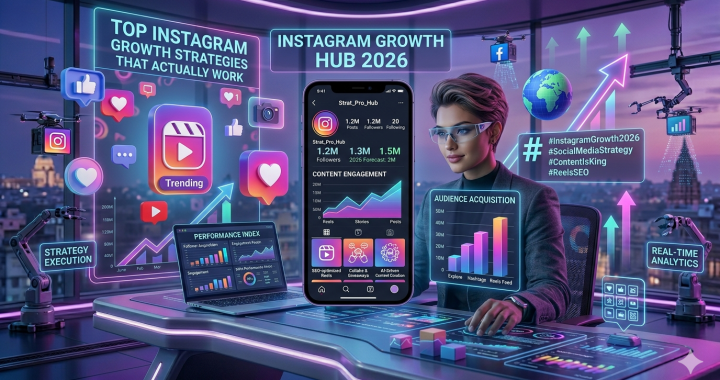
Top Instagram Growth Strategies That Actually Work IN 2026.

Instagram is no longer just a photo-sharing platform. Today, it has become one of the most powerful marketing tools for creators, influencers, startups, and businesses. With millions of posts uploaded daily, growing on Instagram has become more competitive than ever. However, the good news is that smart strategies still work.

If you want real Instagram growth in 2026, you need more than random posting. You need consistency, engaging content, audience understanding, and the right optimization techniques. In this blog, we will explore the top Instagram growth strategies that actually deliver results.


1. Focus on Reels Content

Instagram Reels continue to dominate the platform because short-form videos get higher reach and engagement compared to static posts.

Tips for Better Reels:

  • Create videos between 7–30 seconds
  • Use trending audio and hashtags
  • Add captions to improve watch time
  • Start with a strong hook in the first 3 seconds
  • Post educational, entertaining, or relatable content

Reels help your content reach non-followers through Instagram’s Explore page and recommendation system.


2. Optimize Your Instagram Profile

Your profile is the first impression visitors get. A professional and optimized profile increases the chance of gaining followers.

Profile Optimization Checklist:

  • Use a clear profile picture
  • Write a keyword-rich bio
  • Add a call-to-action (CTA)
  • Include your website link
  • Maintain a clean username

Example CTA:
“Follow for daily digital marketing tips 🚀”


3. Post Consistently

Consistency is one of the biggest factors behind Instagram growth. Posting regularly signals the algorithm that your account is active.

Recommended Posting Frequency:

  • Reels: 4–5 times weekly
  • Stories: Daily
  • Carousel Posts: 2–3 times weekly

Consistency builds trust and keeps your audience engaged.


4. Use Smart Hashtag Strategies

Hashtags help Instagram understand your content category and improve discoverability.

Best Practices:

  • Use a mix of small, medium, and large hashtags
  • Avoid banned or spammy hashtags
  • Use niche-specific hashtags
  • Limit hashtags to 5–15 relevant ones

Example:
If your niche is fitness, use hashtags like:
#FitnessTips #HomeWorkout #FitnessMotivation


5. Create High-Value Carousel Posts

Carousel posts often get higher engagement because users spend more time swiping through the content.

Carousel Ideas:

  • Step-by-step guides
  • Marketing tips
  • Mistakes to avoid
  • Before-and-after examples
  • Case studies

Educational content performs extremely well because users save and share it.


6. Engage With Your Audience

Instagram rewards accounts that actively interact with their followers.

Engagement Tips:

  • Reply to comments quickly
  • Respond to DMs
  • Ask questions in captions
  • Use polls and quizzes in Stories
  • Comment on other creators’ posts

Engagement helps build community and increases visibility.


7. Collaborate With Influencers and Creators

Collaboration exposes your content to a wider audience.

Collaboration Ideas:

  • Joint Reels
  • Live sessions
  • Story shoutouts
  • Giveaway partnerships

Even micro-influencers can bring quality engagement if their audience matches your niche.


8. Use Trending Audio and Viral Formats

Trending sounds increase the chances of appearing on the Reels feed.

How to Find Trends:

  • Check popular Reels daily
  • Save trending audios
  • Follow creators in your niche
  • Adapt trends creatively

Do not copy trends blindly. Add your unique style or message.


9. Analyze Insights and Improve Content

Instagram Insights helps you understand what works and what doesn’t.

Important Metrics:

  • Reach
  • Watch time
  • Saves
  • Shares
  • Engagement rate

Focus more on content that gets saves and shares because Instagram considers it valuable.


10. Build a Personal Brand

People follow personalities more than logos. Whether you are a business owner or creator, showing your face and story builds trust.

Personal Branding Tips:

  • Share your journey
  • Post behind-the-scenes content
  • Be authentic
  • Share opinions and experiences

Authenticity creates stronger audience connections.


Common Instagram Growth Mistakes

Avoid these mistakes if you want long-term success:

  • Buying fake followers
  • Posting inconsistent content
  • Ignoring comments and DMs
  • Using irrelevant hashtags
  • Uploading low-quality videos
  • Copying competitors without originality

Organic growth may take time, but it builds a loyal audience.


Conclusion

Instagram growth in 2026 is all about consistency, creativity, and audience engagement. For a coordinated business strategy beyond Instagram alone, explore our social media marketing services. There is no magic shortcut to success, but using the right strategies can significantly increase your reach and followers.

Focus on creating valuable Reels, engaging with your audience, using smart hashtags, and staying updated with trends. Most importantly, be authentic and patient because real Instagram growth takes time.

If you apply these strategies consistently, your Instagram account can grow faster and build a strong online presence.


Frequently Asked Questions (FAQs)

1. What is the fastest way to grow on Instagram?

The fastest way is to post engaging Reels consistently, use trending audio, and interact actively with your audience.


2. How many times should I post on Instagram?

Posting 4–5 Reels weekly and daily Stories is considered effective for growth.


3. Do hashtags still work on Instagram?

Yes, relevant hashtags still help improve reach and discoverability when used correctly.


4. Is buying Instagram followers a good idea?

No, fake followers reduce engagement rates and can harm account credibility.


5. Why are Instagram Reels important?

Reels receive higher organic reach because Instagram promotes short-form video content heavily.

Google Ads versus Meta Ads comparison for business growth

Influencer Marketing vs Paid Ads – Which Gives Better ROI?

In today’s digital marketing world, businesses are constantly searching for the best strategies to increase brand awareness, generate leads, and boost sales. Two of the most popular methods are influencer marketing and paid advertising. Both strategies can deliver excellent results, but the real question is: which one provides better ROI (Return on Investment)?

The answer depends on your business goals, target audience, budget, and marketing strategy. Let’s explore both methods in detail and understand which one can give your business better results.

What is Influencer Marketing?

Influencer marketing is a strategy where brands collaborate with social media influencers to promote their products or services. Influencers already have loyal followers who trust their recommendations.

For example, when a fitness influencer promotes a protein supplement on Instagram or YouTube, their audience is more likely to try that product because they trust the influencer.

Benefits of Influencer Marketing

  • Builds trust and credibility quickly
  • Creates authentic and engaging content
  • Improves brand awareness
  • Helps reach niche audiences
  • Generates higher engagement rates

Drawbacks of Influencer Marketing

  • Results may not be immediate
  • ROI can be difficult to track
  • Fake followers and low-quality influencers can reduce effectiveness
  • Campaign success depends heavily on the influencer’s reputation

What are Paid Ads?

Paid ads are advertisements businesses run on platforms like Google, Facebook, Instagram, LinkedIn, and YouTube. Brands pay these platforms to display ads to targeted users.

Paid advertising allows businesses to control their targeting, budget, and campaign goals. For search-focused campaigns, learn about our Google Ads management services.

Benefits of Paid Ads

  • Instant traffic and visibility
  • Highly targeted audience reach
  • Easy performance tracking and analytics
  • Flexible budget options
  • Faster lead generation and conversions

Drawbacks of Paid Ads

  • Can become expensive over time
  • Users may ignore or skip ads
  • Requires optimization skills for better performance
  • Results stop when ad spending stops

Influencer Marketing vs Paid Ads: ROI Comparison

1. Trust and Authenticity

Influencer marketing wins in terms of trust. Consumers often trust recommendations from real people more than direct advertisements.

Paid ads sometimes feel promotional, while influencer content appears more natural and relatable.

2. Speed of Results

Paid ads provide faster results. Businesses can generate traffic, clicks, and leads within hours of launching campaigns.

Influencer marketing usually takes longer to build momentum and engagement.

3. Audience Targeting

Paid advertising offers advanced targeting options based on age, interests, behavior, location, and demographics.

Influencer marketing reaches audiences based on the influencer’s follower base, which may not always be perfectly targeted.

4. Cost Effectiveness

Micro-influencers often provide better engagement at lower costs compared to expensive ad campaigns.

However, paid ads allow businesses to scale campaigns easily with predictable budgets.

5. Long-Term Brand Value

Influencer collaborations can create long-lasting brand trust and community engagement.

Paid ads are more effective for short-term sales and immediate campaign goals.

Which Strategy Gives Better ROI?

There is no single winner because both strategies work differently.

Influencer Marketing is Better For:

  • Brand awareness
  • Building trust
  • Lifestyle and fashion brands
  • Beauty and fitness products
  • Community engagement

Paid Ads are Better For:

  • Immediate sales
  • Lead generation
  • Retargeting campaigns
  • E-commerce businesses
  • Fast scalability

The Best Approach: Combine Both

The smartest digital marketing strategy is combining influencer marketing with paid advertising.

For example:

  • Use influencers to create authentic content
  • Promote that content through paid ads
  • Retarget engaged users with conversion-focused campaigns

This hybrid strategy helps businesses maximize both trust and conversions.

Conclusion

Influencer marketing and paid ads both have unique strengths. Influencer marketing builds authenticity and customer trust, while paid ads deliver fast and measurable results.

If your goal is long-term brand loyalty, influencer marketing may provide better ROI. If you want quick conversions and scalable growth, paid ads are often the better choice.

The most successful brands today combine both strategies to create a balanced and effective digital marketing campaign.

FAQs

1. Which is cheaper: influencer marketing or paid ads?

Influencer marketing can be cheaper when working with micro-influencers, while paid ads may require continuous spending for consistent results.

2. Which strategy gives faster results?

Paid advertising delivers faster results because campaigns can start generating traffic immediately.

3. Is influencer marketing better for small businesses?

Yes, small businesses often benefit from influencer marketing because it helps build trust and local audience engagement.

4. Can influencer marketing increase sales?

Yes, influencer marketing can increase sales by promoting products through trusted creators and authentic recommendations.

5. Are paid ads worth it in 2026?

Absolutely. Paid ads remain one of the most effective ways to target audiences, generate leads, and scale online businesses.

6. Should businesses use both influencer marketing and paid ads?

Yes, combining both strategies can improve brand awareness, engagement, and conversions for better overall ROI.

Free social media marketing tools for digital marketers in 2026

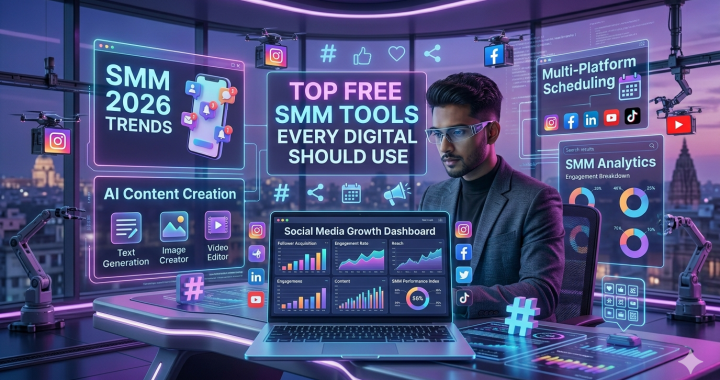
Top Free SMM Tools Every Digital Marketer Should Use

Quick answer: the best free SMM tools in 2026 are not one single app. A practical stack usually combines a design tool, a scheduler, a publishing inbox, analytics, research and an AI assistant. For most small businesses and solo marketers, a strong starting stack is Canva Free, Buffer Free, Meta Business Suite, Google Analytics, Google Trends and ChatGPT Free.

FomoFunnel reviewed this topic around what marketers actually need: creating content faster, publishing consistently, understanding what is working, finding new ideas and turning social attention into enquiries. Free plans and usage limits can change, so always check the provider’s current pricing or help page before building a permanent workflow around a feature.

Best free SMM tools in 2026: quick comparison

Tool Best for Why it is useful
Canva Free Social creatives Fast design workflow for posts, stories, thumbnails and simple campaign assets.
Buffer Free Scheduling Useful for planning a small number of social channels and keeping a posting queue organized.
Meta Business Suite Facebook & Instagram Central place for publishing, inbox management and Meta account workflows.
Google Analytics Website results Shows what social traffic does after it reaches your website.
Google Trends Topic research Helps compare interest in topics and spot seasonal demand.
ChatGPT Free Ideas and first drafts Useful for brainstorming hooks, content angles, outlines and repurposing ideas.

1. Canva Free: best for social media design

Canva is one of the easiest ways to create social media graphics without starting from a blank canvas. Its free plan gives individual users access to core design tools and free content, while premium assets and some advanced features remain paid. Canva also explains that Free and Pro content have different licensing rules, so marketers should check the license before using assets in commercial campaigns.

Use it for: Instagram carousels, story layouts, LinkedIn graphics, ad mockups, YouTube thumbnails and simple brand templates.

Practical tip: do not use a different template style for every post. Build a small visual system with 2-3 layouts, one type scale and a limited color palette. Consistency usually improves recognition more than adding more effects.

Canva’s own resources confirm that a free plan is available, and its licensing guide explains the difference between Free and Pro content.

2. Buffer Free: best for lightweight scheduling

Buffer is useful when the main problem is consistency rather than content creation. As of September 2026, Buffer’s official pricing page says its Free plan supports up to three channels and up to 10 scheduled posts per channel at a time. That makes it practical for a freelancer, founder or small local business that does not need a large team workflow.

Use it for: planning a weekly posting queue, spreading posts across channels and reducing last-minute publishing.

Practical tip: scheduling tools do not fix weak content. Use them to protect consistency, then review saves, replies, profile visits, clicks and enquiries to decide what to repeat.

Check Buffer’s current Free plan limits here.

3. Meta Business Suite: best for Facebook and Instagram operations

If most of your social activity is on Facebook and Instagram, Meta Business Suite is often the most direct operating dashboard. It brings Meta publishing and business communication workflows into one place, which can reduce the need for another tool when you are still small.

Use it for: Facebook and Instagram publishing, account management and handling messages or comments from Meta channels.

Practical tip: separate content performance from business performance. A Reel can get high reach and still generate zero enquiries. Track the next action: profile visits, website clicks, WhatsApp conversations, calls or form submissions.

4. Google Analytics: best for measuring what social traffic actually does

Social platforms show engagement inside the platform. Google Analytics helps answer a different question: what happens after someone reaches your website? Google’s official Analytics page states that its core tools are available free of charge and are designed to help businesses understand customer journeys and improve marketing ROI.

Use it for: landing-page behavior, traffic-source analysis, engagement and conversion-path analysis.

Practical tip: do not treat every social click as a lead. Configure meaningful events for form submissions, WhatsApp clicks, phone clicks or completed booking actions where technically possible.

Google Analytics overview.

5. Google Trends: best for topic and demand research

Google Trends is useful before you create content because it can show whether interest in a topic is rising, seasonal or region-specific. It is especially helpful when you are deciding between two similar content ideas or planning around festivals, exams, shopping periods, events or industry news.

Use it for: comparing topics, checking seasonality and finding regional interest patterns.

Practical tip for India: compare national interest with your target market. A topic with large India-wide interest may still have little relevance for a local business in Prayagraj, while a smaller local-intent topic may generate better enquiries.

6. ChatGPT Free: best for brainstorming and content workflow support

ChatGPT can help marketers generate angles, outlines, hooks, repurposing ideas and first-draft variations. OpenAI’s current Free-tier documentation says the free plan includes a range of chat and tool capabilities, while limits and available features can change over time.

Use it for: content ideation, headline variations, FAQ discovery, rewriting rough notes and turning one long-form idea into multiple social formats.

Do not use it as: an automatic publishing machine. Verify facts, remove generic wording, add real context and make sure the final post reflects your brand rather than sounding like a template.

Which free SMM tool should you choose?

Choose the tool based on the bottleneck in your workflow:

  • If design is slow: start with Canva Free.
  • If posting is inconsistent: add Buffer Free or use native platform scheduling.
  • If Facebook and Instagram are your main channels: use Meta Business Suite first.
  • If you get traffic but do not know what converts: set up Google Analytics properly.
  • If you struggle to find topics: use Google Trends plus customer questions.
  • If ideation takes too long: use ChatGPT to accelerate research and drafting, then edit heavily.

A simple free SMM workflow for a small business

  1. Research: collect customer questions, search trends and competitor themes.
  2. Plan: choose 3-4 repeatable content pillars instead of posting randomly.
  3. Create: build visuals in a consistent template system.
  4. Schedule: queue content so execution does not depend on daily motivation.
  5. Measure: review both platform metrics and website actions.
  6. Improve: repeat topics that generate business signals, not only vanity metrics.

If you need help turning social media into a connected acquisition system, see our social media marketing services in Prayagraj. For businesses that also need stronger organic discovery, connect the social plan with SEO, content marketing and a conversion-focused website.

Free SMM tools: frequently asked questions

What are SMM tools?

SMM tools are software products that help marketers plan, create, publish, manage or measure social media activity. Different tools solve different parts of the workflow, so a small stack is usually more useful than searching for one tool that does everything.

Are free SMM tools enough for a small business?

Often, yes at the beginning. A small business can cover design, scheduling, publishing, analytics and research with free tools. Paid plans become more useful when you need larger teams, higher limits, deeper analytics, approvals, automation or multi-client workflows.

What is the best free SMM tool for Instagram?

There is no universal best tool. Canva is useful for design, Meta Business Suite for Meta-native publishing and management, and Google Analytics for understanding what Instagram traffic does on your website.

Can AI replace a social media manager?

No. AI can speed up research, ideation and drafting, but positioning, taste, customer understanding, fact-checking, community judgment and business decisions still need human oversight.

Final takeaway

The smartest free SMM stack is the one that removes the biggest bottleneck in your current process. Start with a small number of tools, connect them to a clear content strategy and measure whether social activity is producing useful business actions. More tools do not automatically create better marketing.

For a practical review of your current social, search and website funnel, contact FomoFunnel or start a WhatsApp conversation. We focus on Prayagraj/Allahabad businesses first while also supporting relevant clients across India.

AI search and SEO strategy for Google AI Overviews and AI Mode

SEO for Google AI Overviews & AI Mode in 2026: What Actually Works

Search is changing quickly, but the fundamentals have not disappeared. In 2026, people discover businesses through traditional results, AI Overviews, AI Mode and conversational search. The goal is not to replace SEO with a new acronym. It is to make your website easier to crawl, easier to understand and genuinely more useful than the generic content already online.

Google’s current guidance is clear: its generative AI features still depend on core Search ranking and quality systems. That means strong technical SEO, helpful content, clear internal links, useful images and a good page experience continue to matter.

SEO, AEO and GEO: what actually matters?

AEO usually means Answer Engine Optimization and GEO means Generative Engine Optimization. These labels can be useful, but Google says optimizing for generative AI search is still fundamentally SEO. You do not need a separate “AI website.” You need a stronger version of the website you already have.

If your business needs help with that foundation, start with our SEO services and make sure your most important commercial pages are technically sound before chasing new AI-search tactics.

1. Publish information that adds something new

The easiest content to generate is also the easiest content to ignore. Articles that repeat definitions found on hundreds of websites rarely give search engines or readers a strong reason to choose them.

Add first-hand value: campaign lessons, screenshots, customer questions, local market observations, before-and-after examples, checklists and decisions made during real projects. This kind of information is more useful and harder to copy.

2. Answer the main question early, then go deeper

Make the page easy to scan. Give a direct answer near the beginning, then explain the reasoning, examples, limitations and next steps. Use one descriptive H1 and logical H2/H3 sections rather than filling the design with multiple competing H1 headings.

3. Build topic clusters instead of random posts

A digital marketing site should build depth around the services it sells. An SEO cluster can cover local SEO, technical SEO, content optimization, Google Business Profile, AI-search visibility and link earning. A paid-media cluster can connect Google Ads, landing pages, conversion tracking and remarketing.

Every article should link naturally to the relevant service page and one or two related guides. That helps visitors move through the site and gives search engines clearer context.

4. Make sure important pages can be indexed

No AI-search strategy can rescue a page that search engines cannot crawl or index. Important pages should return a normal 200 response, use the intended canonical URL, avoid accidental noindex directives and be included in a valid XML sitemap.

Internal links should make service pages easy to reach, and mobile visitors should be able to read and use the page comfortably.

Google also clarified in 2026 that an llms.txt file is not required for Google Search visibility. It may be useful for other systems, but it is not a shortcut to AI rankings.

5. Use images and video when they improve the answer

Screenshots, diagrams, short videos, charts and original examples can make a page more useful than another text-only article. Give meaningful images descriptive alt text that explains what the image communicates. Do not stuff the same keyword into every alt attribute.

6. Strengthen local relevance

For service businesses, AI visibility and local SEO overlap. Your website should make it obvious where you operate, what you provide and why a customer in that location should choose you.

For example, businesses targeting this region can connect service pages to a detailed Prayagraj digital marketing page, publish locally useful examples and keep business information consistent across the site and Google Business Profile.

7. Do not confuse publishing volume with authority

AI makes it easy to produce dozens of articles. That does not make the site more authoritative. Google warns against scaled low-value content created mainly to manipulate rankings or AI responses.

Before creating a new URL, check whether an older page already covers the intent. Updating a useful existing article is often better than publishing a competing version.

8. Measure progress in Search Console

Track impressions, clicks, CTR, average position and landing-page growth. Pages already ranking between roughly positions 8 and 20 can be especially valuable opportunities because Google has already found some relevance.

Improve those pages with stronger titles, clearer sections, fresher examples and better internal links before starting from zero with another article.

A practical 30-day plan

Week 1: fix titles, descriptions, headings, crawlability and internal links on key service pages.

Week 2: refresh articles that already receive impressions and connect them to commercial pages.

Week 3: publish content that fills genuine gaps in customer questions and search intent.

Week 4: review Search Console performance and improve pages gaining visibility but not yet earning enough clicks.

Final takeaway

SEO is not dead because AI entered search. It is becoming broader. Your content now needs to work for traditional search results, AI-assisted discovery and real human decision-making at the same time.

Need a structured plan for your website? Explore FomoFunnel’s SEO services or request a consultation.
Sources

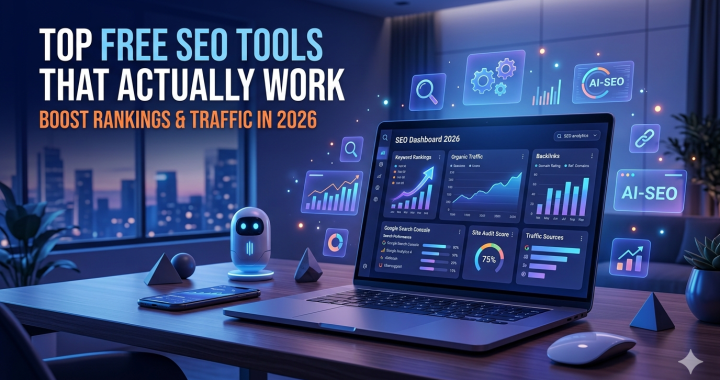
Top Free SEO Tools That Actually Work in 2026

In today’s digital world, ranking on Google is no longer optional for businesses, bloggers, or marketers. Whether you own a startup, eCommerce store, or personal blog, using the right SEO tools can help you improve website traffic, visibility, and conversions. The good news? You don’t always need expensive software to grow online.

There are many free SEO tools available that provide powerful insights for keyword research, technical SEO, backlinks, content optimization, and competitor analysis. In this blog, we will explore the top free SEO tools that actually work in 2026 and help websites rank higher on search engines.Why SEO Tools Are Important

SEO tools help marketers

  • Find profitable keywords
  • Analyze competitors
  • Improve website speed
  • Track rankings
  • Optimize content
  • Detect technical SEO issues
  • Build backlinks

Without proper SEO tools, it becomes difficult to understand what is working and what needs improvement.


1. Google Search Console

Best For: Website Performance & Indexing

Google Search Console is one of the most powerful free SEO tools offered directly by Google. It helps website owners monitor search performance and fix indexing issues.

Features:

  • Track keyword rankings
  • Submit sitemaps
  • Monitor indexing status
  • Check mobile usability
  • Analyze clicks and impressions

Why It Works:

Since the data comes directly from Google, it provides accurate insights for improving organic rankings.


2. Google Analytics 4 (GA4)

Best For: Website Traffic Analysis

Google Analytics helps track user behavior and website traffic sources.

Features:

  • Real-time traffic monitoring
  • Audience insights
  • Conversion tracking
  • User journey analysis
  • Bounce rate tracking

Why It Works:

It helps businesses understand which pages generate traffic and conversions.

Google Analytics for measuring SEO traffic and conversions


3. Ubersuggest

Best For: Keyword Research

Ubersuggest by Neil Patel is a beginner-friendly SEO tool for keyword research and content ideas.

Features:

  • Keyword suggestions
  • SEO difficulty score
  • Backlink overview
  • Content ideas
  • Competitor analysis

Why It Works:

It provides useful keyword data even in the free version.

HubSpot free SEO and marketing tools


4. Ahrefs Free Webmaster Tools

Best For: Backlink Analysis

Ahrefs offers free webmaster tools that help monitor backlinks and technical SEO.

Features:

  • Site audit
  • Backlink checker
  • Broken link detection
  • Keyword insights

Why It Works:

Backlinks are still important for SEO, and Ahrefs provides quality backlink analysis.


5. SEMrush Free Tools

Best For: Competitor Research

SEMrush offers several free tools for keyword tracking and competitor analysis.

Features:

  • Domain overview
  • Keyword tracking
  • Site audit
  • SEO writing assistant

Why It Works:

It gives marketers valuable competitor insights to improve SEO strategy.


6. Screaming Frog SEO Spider

Best For: Technical SEO

Screaming Frog helps identify technical issues affecting website performance.

Features:

  • Crawl website pages
  • Detect broken links
  • Analyze metadata
  • Find duplicate content

Why It Works:

Technical SEO issues can hurt rankings, and this tool helps fix them quickly.


7. Answer The Public

Best For: Content Ideas

This tool helps generate content ideas based on real user searches.

Features:

  • Question-based keywords
  • Search intent analysis
  • Trending topic ideas

Why It Works:

It helps create content that users are actively searching for online.

AnswerThePublic keyword and question research tool


8. Canva

Best For: SEO Graphics & Blog Images

Visual content improves engagement and SEO performance.

Features:

  • Blog banners
  • Infographics
  • Social media graphics
  • Thumbnail design

Why It Works:

Better visuals improve user engagement and sharing potential.

Canva for creating SEO-friendly blog and social visuals


9. PageSpeed Insights

Best For: Website Speed Optimization

Website speed directly impacts SEO rankings and user experience.

Features:

  • Mobile speed analysis
  • Core Web Vitals report
  • Performance recommendations

Why It Works:

Google prioritizes fast-loading websites in search results.


10. Yoast SEO Plugin

Best For: WordPress SEO

Yoast SEO helps optimize blog posts and website pages.

Features:

  • Meta title optimization
  • Readability analysis
  • XML sitemap creation
  • Schema support

Why It Works:

It simplifies on-page SEO for beginners and professionals.


How to Choose the Right SEO Tool

Before selecting an SEO tool, consider:

  • Your SEO goals
  • Budget
  • Website size
  • Technical knowledge
  • Required features

Using multiple free tools together can create a powerful SEO strategy.

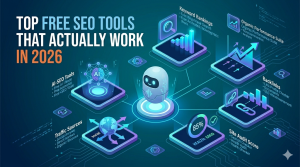
Illustration of combining free SEO tools into one workflow


Final Thoughts

SEO is constantly evolving, but the right tools can make optimization easier and more effective. The free SEO tools mentioned above help improve rankings, drive organic traffic, and grow online visibility without spending huge amounts of money.

If you are a beginner, start with Google Search Console, Google Analytics, and Ubersuggest. As your website grows, combine multiple tools to create a complete SEO strategy.

Investing time in SEO today can generate long-term traffic and business growth in the future.


Frequently Asked Questions (FAQs)

1. Which is the best free SEO tool for beginners?

Google Search Console is considered one of the best free SEO tools for beginners because it provides direct data from Google.

2. Can free SEO tools improve Google rankings?

Yes, free SEO tools help identify keywords, technical issues, and optimization opportunities that improve rankings.

3. Is Ubersuggest completely free?

Ubersuggest offers limited free searches daily along with paid premium plans.

4. Why is technical SEO important?

Technical SEO improves website crawling, indexing, speed, and user experience, which directly affects rankings.

5. How many SEO tools should I use?

Using 3–5 SEO tools together is usually enough for keyword research, analytics, backlinks, and technical SEO.

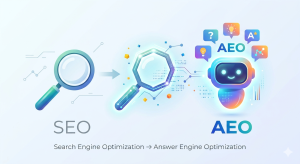
What is AEO and how is it different from SEO?

What is AEO and how is it different from SEO?

What is AEO and How is it different from SEO?

Answer:
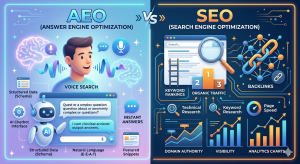
AEO (Answer Engine Optimization) focuses on giving direct, clear answers for AI tools and voice search, while SEO (Search Engine Optimization) focuses on improving website rankings on search engines to increase organic traffic.


🔵 What is AEO (Answer Engine Optimization)?

🔹 Definition

AEO is the process of optimizing content to provide short, accurate answers that search engines and AI platforms can easily understand and display.

🔹 Key Features

  • Focus on question-based keywords (What, How, Why)
  • Provides short answers (40–60 words)
  • Optimized for featured snippets and voice search
  • Uses structured content like FAQ .


🔵 What is SEO (Search Engine Optimization) ?

🔹 Definition

SEO is the practice of improving a website’s visibility on search engines like Google to rank higher and drive organic traffic.

🔹 Key Features

  • Keyword optimization (short-tail and long-tail)
  • Backlink building
  • Technical improvements (speed, mobile-friendly)
  • High-quality, detailed content

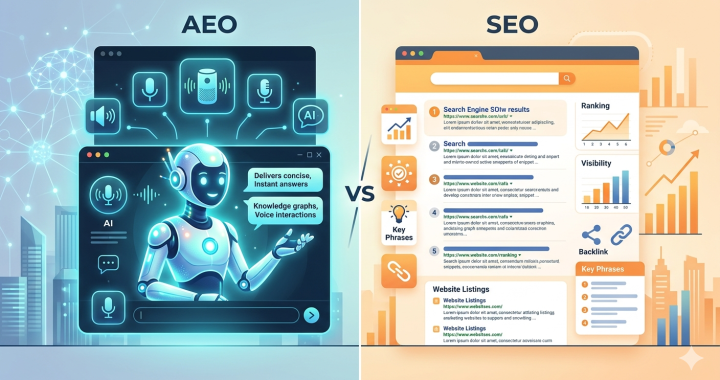
Illustration explaining Answer Engine Optimization and SEO


🔵 AEO vs SEO: Key Differences

Goal:
AEO → Provide instant answers
SEO → Improve rankings

Focus:
AEO → AI tools and voice search
SEO → Search engines

Content Style:
AEO → Short and structured
SEO → Detailed and long-form

Search Results:

AEO → Featured snippets, AI answers
SEO → Organic listings.

Comparison of AEO answer visibility and traditional SEO listings


🔵 Why AEO is Important in 2026

🔹 Growth of AI Search

Users now prefer instant answers from AI tools instead of visiting multiple websites.

🔹 Zero-Click Searches

Many users get answers directly on search pages. AEO helps your content become that answer.

AI search results showing direct answers from optimized content


🔵 How to Optimize for AEO

🔹 Best Practices

  • Start with a direct answer at the top
  • Use question-based headings
  • Keep answers short and clear
  • Add FAQ sections
  • Use simple and easy language

Content structure for earning visibility in answer engines and search


🔵 Conclusion

AEO and SEO work together. SEO helps your website rank, while AEO ensures your content becomes the answer users see first. Combining both strategies gives better visibility and results.


🔵 FAQs

❓ What is AEO in simple words?

AEO means optimising content to give direct answers that AI and search engines can easily show.

❓ Is AEO replacing SEO?

No, AEO is not replacing SEO. It is an advanced part of SEO.

❓ Which is better, AEO or SEO?

Both are important. SEO brings traffic, and AEO improves visibility through instant answers.

What is SEO in 2026?

What is SEO in 2026?

What is SEO in 2026? A Complete Guide to the Future of Search

Introduction

Search Engine Optimization (SEO) has evolved dramatically over the years—and in 2026, it’s no longer just about keywords and backlinks. Today, SEO is a multi-dimensional strategy that blends AI, user experience, intent, and content quality to drive organic growth.

With search engines becoming smarter and users expecting instant, accurate answers, businesses must adapt to stay visible online. In this guide, we’ll explore what SEO looks like in 2026, how it works, and how you can leverage it to grow your brand.


What is SEO in 2026?

SEO in 2026 is the process of optimizing your digital presence to rank across AI-powered search engines, voice assistants, and zero-click platforms.

It’s no longer limited to Google rankings—it now includes:

  • AI-generated search results
  • Voice search optimization
  • Visual and video search
  • Featured snippets and instant answers

👉 In simple terms:
SEO = Visibility wherever your audience searches.


How SEO Has Changed Over Time

Then (Traditional SEO)

  • Focus on keywords
  • Backlink building
  • Ranking on search engine results pages (SERPs)

Now (SEO in 2026)

  • Focus on user intent & experience
  • AI-driven content optimization
  • Multi-platform visibility (Google, AI tools, social search)

👉 SEO has shifted from search engine-focused to user-focused.


Key Elements of SEO in 2026

1. 🧠 Search Intent Optimization

Understanding why users search is more important than what they search.

Types of intent:

  • Informational
  • Navigational
  • Transactional

👉 Content must match intent perfectly to rank.


2. 🤖 AI & Machine Learning Integration

Search engines use AI to:

  • Understand context
  • Rank content quality
  • Predict user behavior

👉 Your content must be helpful, structured, and relevant.


3. 📱 User Experience (UX) Signals

Google now prioritizes:

  • Fast loading speed
  • Mobile responsiveness
  • Easy navigation

👉 Better UX = Higher rankings.


4. 🎥 Content Diversity

SEO is no longer just text-based. You must optimize:

  • Blog posts
  • Videos
  • Images
  • Infographics

👉 Multi-format content improves visibility.


5. 🔍 Zero-Click Searches

Users often get answers without clicking a website.

Examples:

  • Featured snippets
  • Knowledge panels
  • AI summaries

👉 Goal: Be the source of the answer, not just a link.


6. 🎙️ Voice & Conversational Search

With voice assistants rising, people search like they speak.

Example:

  • Typed: “best SEO tools”
  • Voice: “What are the best SEO tools for beginners in 2026?”

👉 Use natural, conversational language.


Types of SEO in 2026

1. On-Page SEO

Optimizing:

  • Content
  • Keywords
  • Headings
  • Meta tags

2. Technical SEO

Focus on:

  • Website speed
  • Mobile-friendliness
  • Structured data
  • Indexing

3. Off-Page SEO

Includes:

  • Backlinks
  • Brand mentions
  • Social signals

4. AI SEO (New Trend 🚀)

Optimizing content for:

  • AI search engines
  • Chat-based results
  • Predictive recommendations

Why SEO is Important in 2026

  • 📈 Drives long-term organic traffic
  • 💰 Reduces dependency on paid ads
  • 🏆 Builds brand authority
  • 🎯 Attracts high-intent users

👉 SEO is still the most cost-effective marketing strategy.


SEO Best Practices for 2026

✅ Create High-Quality Content

Focus on value, not just keywords.

✅ Optimize for AI Search

Structure content clearly with headings and answers.

✅ Use Long-Tail Keywords

Target specific, conversational queries.

✅ Improve Page Experience

Fast, mobile-friendly, and user-centric design.

✅ Build Topical Authority

Cover topics deeply instead of writing random blogs.


Common SEO Mistakes to Avoid

  • ❌ Keyword stuffing
  • ❌ Ignoring user intent
  • ❌ Slow website speed
  • ❌ Low-quality backlinks
  • ❌ Duplicate or AI-spam content

Future of SEO: What to Expect

  • AI-generated search will dominate
  • Visual and voice search will grow
  • Personalization will increase
  • Trust and authority will matter more than ever

👉 The future belongs to brands that educate, not just sell.


Conclusion

SEO in 2026 is not just about ranking—it’s about relevance, trust, and user experience. As search engines evolve, businesses must shift from outdated tactics to smart, user-focused strategies.

If you want to succeed, remember:
👉 Create value, understand your audience, and optimize for how people actually search.


FAQs

1. What is SEO in simple terms?

SEO is the process of improving your website to rank higher on search engines and attract organic traffic.

2. Is SEO still relevant in 2026?

Yes, SEO is more important than ever due to increasing online competition.

3. What is AI SEO?

AI SEO focuses on optimizing content for AI-driven search results and platforms.

4. How long does SEO take to show results?

Typically 3–6 months, depending on competition and strategy.

5. What is the biggest SEO trend in 2026?

AI-powered search and zero-click results are the biggest trends.


Final Thought 🚀

SEO is evolving fast—but one thing remains constant:
👉 The better you serve your audience, the better you rank.

AI tools for digital marketing, content, SEO and campaign automation

Best AI Tools for Marketers in 2026: A Practical Stack That Saves Time

There are hundreds of AI tools marketed to digital marketers in 2026. The problem is no longer finding a tool. The problem is choosing a small stack that genuinely saves time without lowering the quality of your marketing.

The best approach is to pick tools by job: research, writing, design, SEO, automation, reporting and campaign execution. One tool does not need to do everything.

Below is a practical stack for marketers, agencies and small businesses that want to use AI without turning their content into repetitive, generic output.

1. ChatGPT — strategy, research and first drafts

ChatGPT is useful when you need help turning messy information into structure. Marketers can use it for campaign angles, customer-question research, content outlines, landing-page alternatives, sales scripts, reporting summaries and first drafts.

The highest-value use is not “write 50 blogs.” It is using AI to speed up thinking while keeping real business context in the final output.

For example, give the tool actual customer objections, real campaign results and your brand positioning. The result will usually be more useful than a generic prompt such as “write an SEO article.”

2. Google Gemini — research inside the Google ecosystem

Gemini can be useful for marketers who already work heavily with Google products and need help summarizing information, exploring ideas or working across documents and research.

It is especially useful when the task begins with a large amount of reference material and you want to compare themes, organize notes or turn information into a structured plan.

3. Perplexity — source-led research

Perplexity is useful when you want a research-first workflow with visible sources. It can help marketers quickly understand a new topic, find current articles and identify questions worth investigating further.

Do not copy a research answer directly into a client campaign. Use it to find sources, then verify important claims before publishing.

4. Canva — fast creative production

Canva remains useful for social posts, presentations, simple ad variations, thumbnails and branded templates. AI-assisted features can speed up layout and ideation, but the strongest results still come from a defined brand system.

Create templates for recurring formats instead of redesigning every post from scratch. That improves consistency and gives your team more time to focus on the message.

If you need a broader content system, see our content marketing services.

5. Semrush or a similar SEO platform — keyword and competitor data

AI can suggest keywords, but marketers still need real search data. SEO platforms help validate demand, review ranking difficulty, analyze competitors and monitor visibility.

Use AI to interpret the data, not replace it. A smart workflow is: collect real keyword and Search Console data first, then use AI to group intent, prioritize opportunities and turn findings into page briefs.

For hands-on search optimization, explore our SEO services.

6. Google Search Console — not an AI tool, but essential

Search Console should be part of every AI-assisted SEO workflow because it shows what Google is actually doing with your site.

Look at queries, pages, impressions, clicks, CTR and average position. A page with growing impressions but a weak CTR may need a stronger title. A page ranking around positions 8–20 may need better sections, internal links or additional proof.

AI becomes much more useful when it is working from this real performance data.

7. HubSpot or another CRM — AI is more valuable with customer data

A CRM helps marketing teams connect campaigns to leads and customers. AI can assist with summarization, follow-up drafting, segmentation ideas and workflow planning, but the real value comes from having clean customer data in the first place.

If leads are scattered across WhatsApp, spreadsheets and inboxes, fix the process before adding more automation.

8. Zapier or Make — connect the workflow

Automation platforms can remove repetitive tasks between forms, spreadsheets, CRMs, email tools and other marketing systems.

Useful examples include sending a new website lead into a CRM, notifying the sales team, triggering a follow-up sequence or adding campaign data to a reporting sheet.

Start with repetitive processes that already work manually. Automating a broken process only makes the problem faster.

9. Email platforms with automation

Email platforms can help marketers build welcome sequences, lead nurturing, abandoned enquiry follow-up and customer reactivation campaigns.

AI can assist with subject-line options, segmentation ideas and first-draft copy, but the strategy should come from customer behavior and the purpose of the sequence.

See our email marketing services for campaign and automation support.

10. AI-assisted ad platforms

Google and Meta are both increasing the role of AI inside advertising. Google’s AI Max for Search, for example, can expand matching and optimize assets within Search campaigns.

That does not remove the need for tracking, positioning or landing-page quality. In fact, automation makes good inputs more important because the platform can scale both strong and weak signals.

Read our current guide to Google Ads AI Max in 2026 for a deeper breakdown.

How to choose an AI marketing tool

Before adding another subscription, ask five questions:

  1. Which repetitive job will this tool remove?
  2. What data will it need to produce useful output?
  3. Who will review the result before it reaches customers?
  4. Can the tool integrate with the systems we already use?
  5. Will it improve speed, quality or measurement enough to justify the cost?

If you cannot answer those questions, the tool may simply become another dashboard nobody uses.

Where human review still matters

AI is strong at speed, variation and synthesis. Humans still need to own positioning, judgment, factual accuracy, brand voice, ethical decisions and the final standard of work.

That is especially important for public-facing content. Generic AI copy can sound polished while saying very little. Real examples, specific observations and a clear point of view make the difference.

A simple AI stack for a small marketing team

You do not need ten paid tools. A lean setup could look like this:

  • Research and drafting: ChatGPT or Gemini.
  • Source-led research: Perplexity.
  • Design: Canva.
  • SEO data: Search Console plus an SEO research platform when needed.
  • Automation: Zapier or Make.
  • CRM and email: one platform that fits your sales process.

Build around your workflow, not around tool hype.

Final takeaway

The best AI tools for marketers in 2026 are the ones that remove repetitive work while keeping strategy and quality under human control. Start with your bottlenecks, choose the smallest stack that solves them and connect every tool to a measurable marketing outcome.

Need help building a practical digital marketing system? Explore FomoFunnel’s digital marketing services or book a consultation.